

Climate resilience is built not only through investments and infrastructure, but also through strong institutions, capable people and systems that can translate climate priorities into effective action.
Under the Climate Adaptation, Resilience and Engagement of Local Governments (CARE-LG) Project, capacity-building support is being provided to all 20 Dzongkhag Administrations to strengthen their capacity to plan, budget, implement and monitor climate change adaptation initiatives.
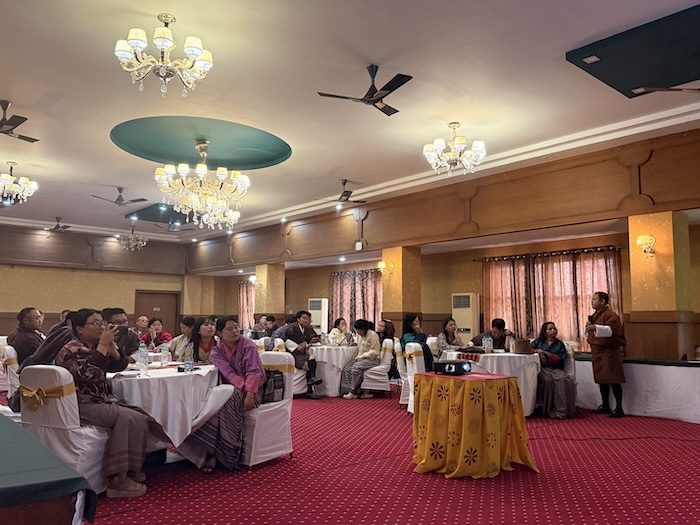
The capacity-building Programme, coordinated by the CARE-LG Project Management Unit (PMU) in collaboration with the Department of Local Governance and Disaster Management (DLGDM), was completed from 18–19 September 2026. The Programme brought together 117 participants (79 male and 38 female) across four training centres, with 17 trainers contributing their knowledge and expertise.
The training focused on strengthening the link between planning and implementation, enabling local governments to better identify climate risks and vulnerabilities, priorities appropriate adaptation measures, allocate resources effectively, implement interventions, and monitor progress and results.
For the CARE-LG Project, capacity building is an investment in long-term institutional resilience. Strengthening the knowledge, systems and skills of local governments will help ensure that climate adaptation is integrated into local planning and development, rather than being addressed as a standalone activity.
As a Direct Access Entity (DAE) of the Green Climate Fund (GCF), the Bhutan Trust Fund for Environmental Conservation (BTF) is supporting the implementation of CARE-LG to strengthen climate resilience at the local level. With stronger capacity at the Dzongkhag level, local institutions will be better positioned to develop and implement climate solutions that respond to the needs, priorities and realities of their communities.
Building institutional capacity today for a more climate-resilient Bhutan tomorrow.