

Bhutan Trust Fund for Environmental Conservation: Investing in a Legacy for Nature
The Bhutan Trust Fund for Environmental Conservation (BTF) is the world’s first environmental trust fund, established in 1991 as a collaborative venture between the Royal Government of Bhutan, United Nations Development Program, and World Wildlife Fund. An endowment of US$20 million was set as target for an innovative mechanism for sustainable financing of conservation programs in Bhutan. Donors to the trust fund include the World Wildlife Fund, Global Environment Facility, the governments of Bhutan, Denmark, Finland, the Netherlands, Norway and Switzerland.
BTF was granted the Royal Charter in 1996 which was revised in 2021 “keeping the present needs and ensure relevance and role of BTF to meet the future challenges”
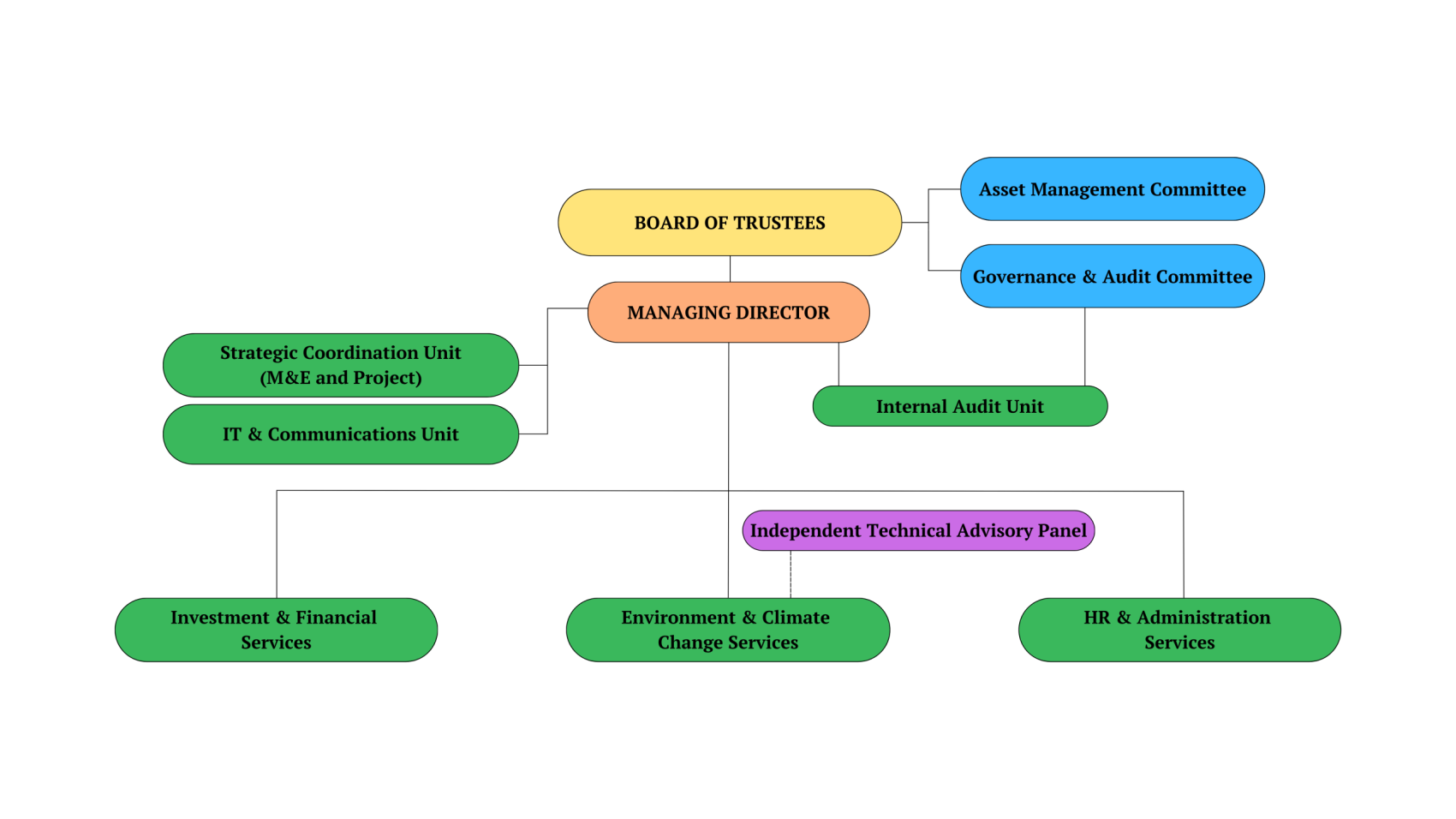
The BTF management is governed by a high-level Board of Trustees, while the day-to-day business is conducted by the BTF Secretariat headed by the Managing Director. Today, it is an effective conservation grant-making organisation, autonomous of the government with the endowment fund reaching US$84 million as of September 2024. Since inception, BTF has awarded more than 286 projects amounting to over US$35 million. Projects are granted through Request for Proposals process with an overall budget of US$ 2 million annually.
BTF has improved substantially in terms of its governance, grant-making, investment and financial management, and monitoring & evaluation practices. With further strengthening in its human resources, BTF’s program management and business operation has developed considerably over the years.
we will build on our country’s rich legacy of safeguarding the natural environment to deliver on our vision and mission.
Vision
Social well being secured through environmental conservation.
Mission
Leverage, upscale and accelerate innovative financing to advances the convervation of biodiversity, resilience to climate change , and coexistence of humans and wildlife , while addressing the advance impact of development on the environment.
Building on our country’s Buddhist philosophy of living in harmony with nature, we will adhere to the following core values while delivering on our mission.

Stewardship
We uphold and advocate environmentally friendly and sustainable practices to safeguard a habitable nation for future generations

Collaboration
We build inclusive team dynamics that nurture cooperation, engagement, and respect, both within and beyond our organization

Transparency
Given our mandate to disburse funds, we prioritize transparency by maintaining honesty, impartiality, trustworthiness, and accountability in all procedures

Adaptability
We embrace change and remain adaptable to the emerging issues and challenges faced by the environmental and development sectors in Bhutan

Innovation
We champion creativity and forward-thinking approaches by continually seeking innovative solutions and by empowering youth to shape the future

Neutrality
We will remain politically impartial in our work and grant making. As individuals, we will continually seek to reflect on and address our own implicit biases
To achieve our vision , we will work on delivering impacts in four priority thematic areas as guided by the Royal Charter 2021

Thematic Area 1: Conserving Biological Diversity
The Bhutan’s rich biodiversity and natural environment are the foundations of our spiritual and cultural heritage, as well as the source of livelihoods for all citizens. It provides essential ecosystem services in the form of food and fodder, medicine, and housing materials. Furthermore, it is the basis of the hydropower and tourism sectors, which contribute up to 40 and 10 percent, respectively, of the national GDP. The key drivers of biodiversity loss in Bhutan include habitat loss and degradation, unsustainable resource extraction, the spread of alien invasive species, and climate change. These factors reinforce one another to exacerbate the loss of biodiversity. Climate change poses a particular threat to Bhutan, given that more than two-thirds of its landscape is mountainous, hosting unique alpine ecosystems with species adapted to cold and harsh conditions.
The Bhutan’s rich biodiversity is safeguarded through the sustainable management of key species and their habitats.
The BTF will be investing in the conservation of threatened species and genetic diversity, management of areas of high biodiversity, restoration of degraded areas, sustainable utilization of natural resources, management and control of alien invasive species, and conservation of native agrobiodiversity.
Thematic Area 2: Enabling Human-wildlife Coexistence
The Bhutanese people have coexisted with wildlife for millennia, guided by their profound belief in Buddhist philosophy that advocates living in harmony with nature, fostering a high level of tolerance towards wildlife. However, escalating cases of human-wildlife conflict, leading to loss and injury to human life, crop and livestock depredation, and damage to physical assets, have heightened tensions between humans and wildlife. In many cases, these conflicts have tragically resulted in retaliatory killing of wildlife. Wildlife damage to crops accounts for up to 18 percent of total household income, and an average of two months per year is spent on guarding crops from wildlife incursions. Crop and property damage from wildlife has led to the abandonment of nearly 40 percent of farmlands, while 14 percent of the farming population has transitioned from farm-based livelihoods to off-farm employment, including migration. Human-wildlife coexistence is enabled by securing the well-being of both people and wildlife The BTF will invest in projects that apply a holistic approach to addressing conflict that encompasses diverse sectors including natural resources, livelihoods and economy, agriculture, education, technology, research, and health.


Thematic Area 3: Mitigating and Adapting to Climate Change
Despite being a carbon negative country, Bhutan is not immune to the impacts of global climate change. Climate change is already affecting key sectors such as water, agriculture, forests, biodiversity, energy, and human health. We are witnessing the drying of water sources, melting of glaciers, and increased incidences of climate-induced hazards such as flash foods, landslides, pest and disease outbreaks, and forest fires. The increasing risks of climate-induced forest fires threaten both biodiversity and Bhutan’s capacity as a carbon sink. Over a thirty-year period (1976–2005), Bhutan’s annual average temperature increased by 0.8 degrees Celsius, with winters warming by 1.3 degrees. Average annual rainfall has decreased overall, although there is high seasonal variability. Future climate projections indicate that by the end of the century, temperatures will increase by about 0.8 to 2.8 degrees (RCP 4.5) and even up to 3.2 degrees (RCP 8.5).
To remain a carbon-neutral nation while strengthening climate resilience of citizens and ecosystems. The BTF will invest in climate mitigation, adaptation, loss and damage, and climate finance. BTF will contribute to the Bhutan Climate Fund which has a requirement of USD 50 million. There is also scope for BTF to be engaged in carbon finance
Thematic Area 4: Addressing Adverse Impacts of Development on the Environment
The Bhutan’s socio-economic development has followed a middle path that is grounded in its commitment to Gross National Happiness (GNH), which prioritizes holistic well-being over purely economic indicators. This principle takes into account Bhutan’s unique cultural heritage, pristine natural environment, and the happiness and well-being of its citizens. Development has, however, led to an increase in greenhouse gas (GHG) emissions and atmospheric pollution, as well as land conversion and waste production. Although Bhutan’s forests presently sequester more GHGs than the total national emissions, projections to 2050 under current rates of development and climate change scenarios suggest that by 2047/48, GHG emissions will surpass the carbon sequestration potential, jeopardizing Bhutan’s carbon-neutrality pledge.
The Green and climate-resilient development contributes to sustainable socio-economic outcomes for the nation.
The BTF will invest in projects that support transformations in the renewable energy, construction, and waste management sectors. Research and capacity building in these sectors will be key to support piloting, innovating, and scaling of processes.